The Object and the Idea
Cylin Wang figured out her double major by way of her college essay. Born in China and raised in Orange County, she arrived at UCLA after a detour through economics, a TED talk on mushroom leather and a moment of clarity she's been living out ever since.
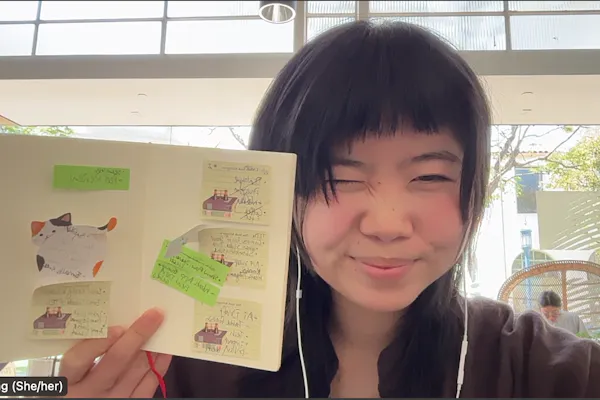
"Science and art are climbing the same mountain from different sides," she recalls writing. "And the higher you climb, the closer the paths are together anyway, and the better the view." Her two seemingly disparate programs work well together for a student who wants to explore pretty much everything.
Juno Lumetta took a different path up that mountain. After caring for their grandparents in the East Bay and spending time at Berkeley City College taking figure drawing every semester, they transferred to UCLA not quite sure what they wanted. Lumetta was sure only that they loved reading, writing and getting their hands on things.
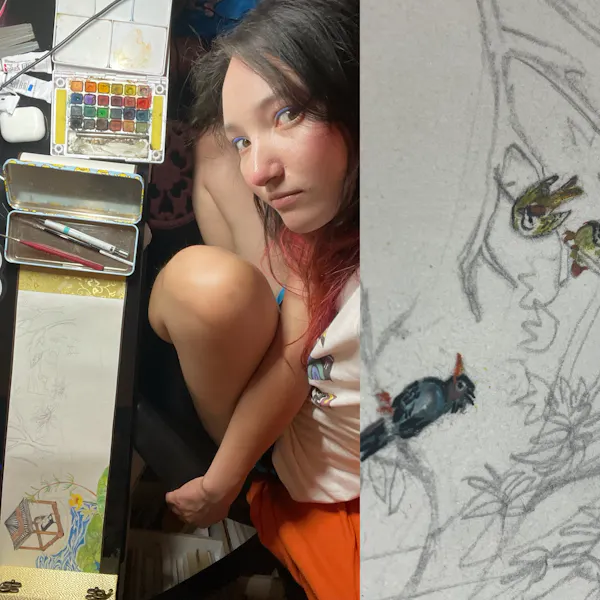
Art history turned out to be the fit.
"I just love thinking about and talking about art and doing project-based work," they said.
The projects have been memorable. For a Byzantine art history course, the challenge was to create a Halloween costume based on a famous piece of architecture. Lumetta built a to-scale paper construction of the Hagia Sophia. For a Ukrainian avant-garde seminar, they created a portrait of Alexandra Exter, a pivotal figure in the movement who never made a self-portrait, placing her as the icon she was alongside the color theory discs that defined her visual practice.
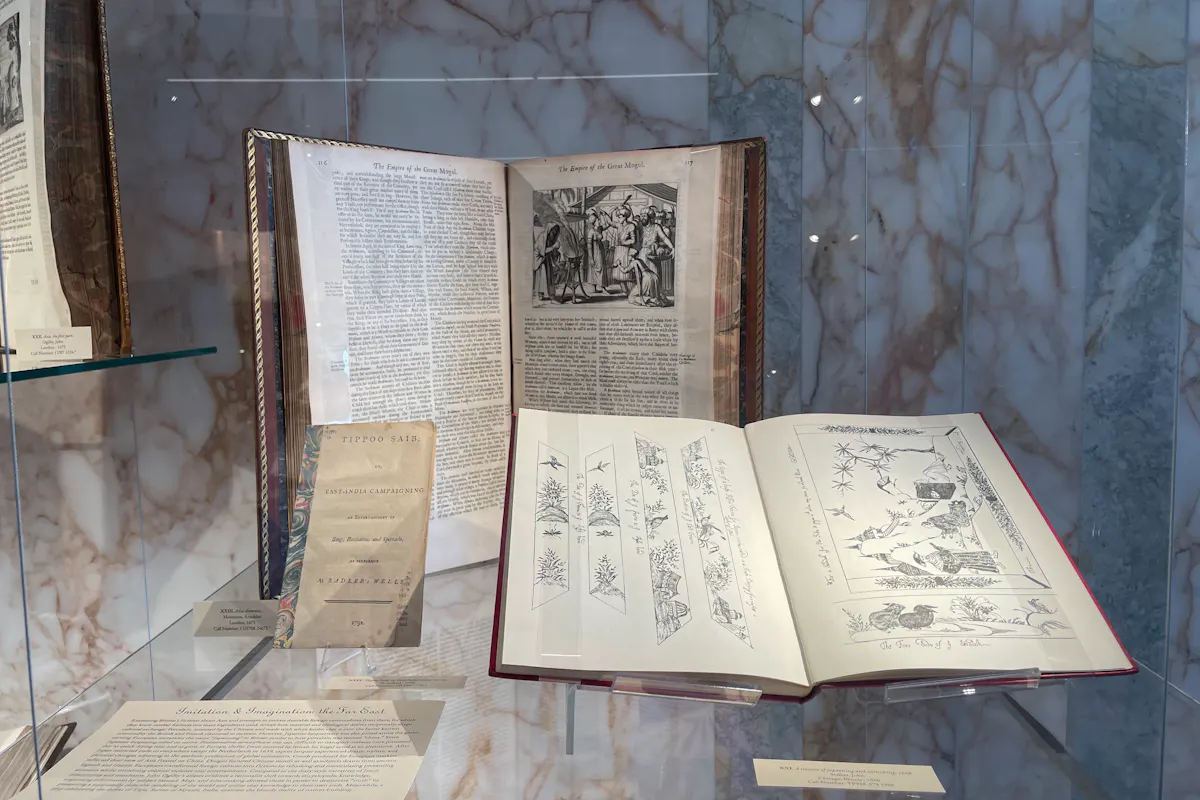
A separate and more sprawling undertaking took Lumetta to UCLA's William Andrews Clark Memorial Library, one of the university's most storied special collections, for a nine-person group curatorial project on the 18th-century home. Working through the library's holdings, they pulled atlases, broadsides, lacquerware instruction manuals and playing cards. The group took objects spanning centuries and continents and built an exhibition that used material culture to trace the roots of European colonialism and consumerism. Lumetta's section focused on British imitations of East Asian decorative arts. They focused on unpacking the warped perceptions embedded in the objects themselves. In a quietly witty touch their classmates loved, Lumetta also drew all nine student curators as period-appropriate figures for some marketing materials.
Wang, meanwhile, has been putting her double-major logic to work running TEDx UCLA, which she revived after a three-year hiatus and rebuilt from scratch with 15 student volunteer organizers. Her curation philosophy was deliberately anti-pedestal, she said. Rather than seeking out the obvious academic voices, she went looking more broadly. One of the event speakers was UCLA senior custodian Daniel Estrada. Wang ran into "Danny" in Boelter Hall one evening and recognized immediately that he was a natural storyteller.
"Anyone here has something worth saying," she said.
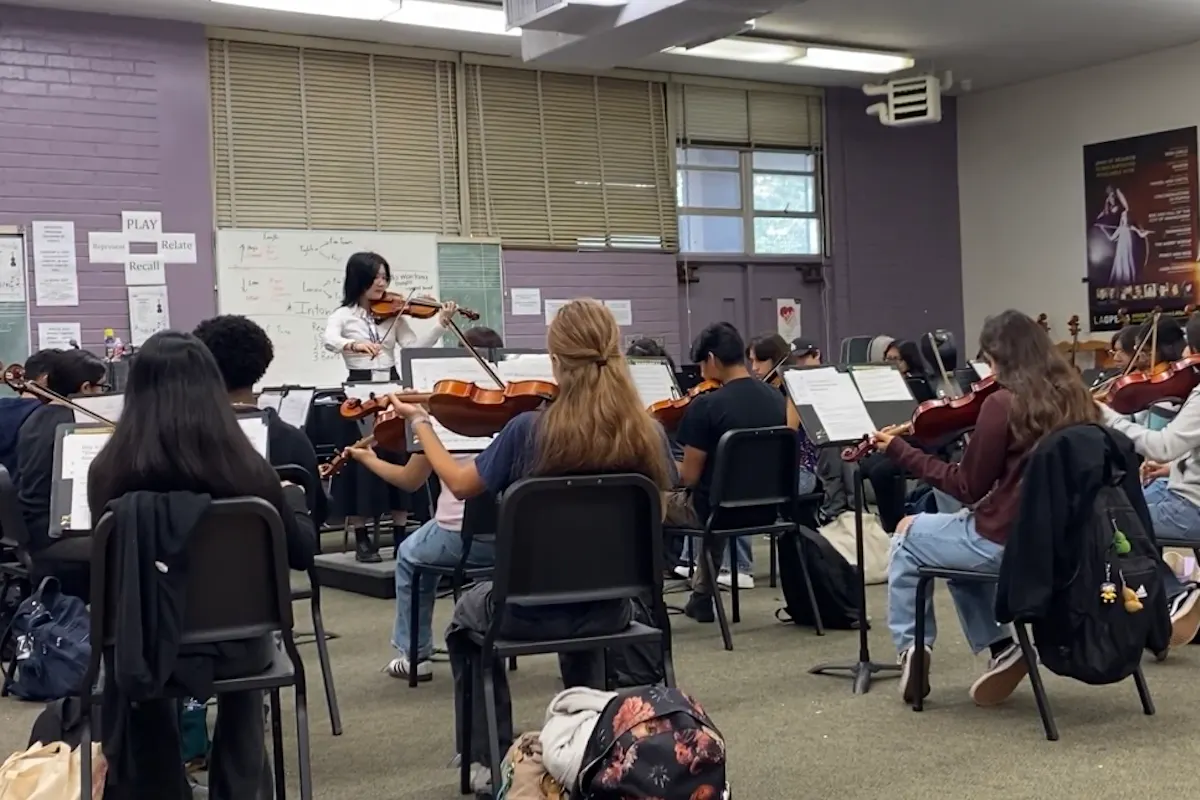
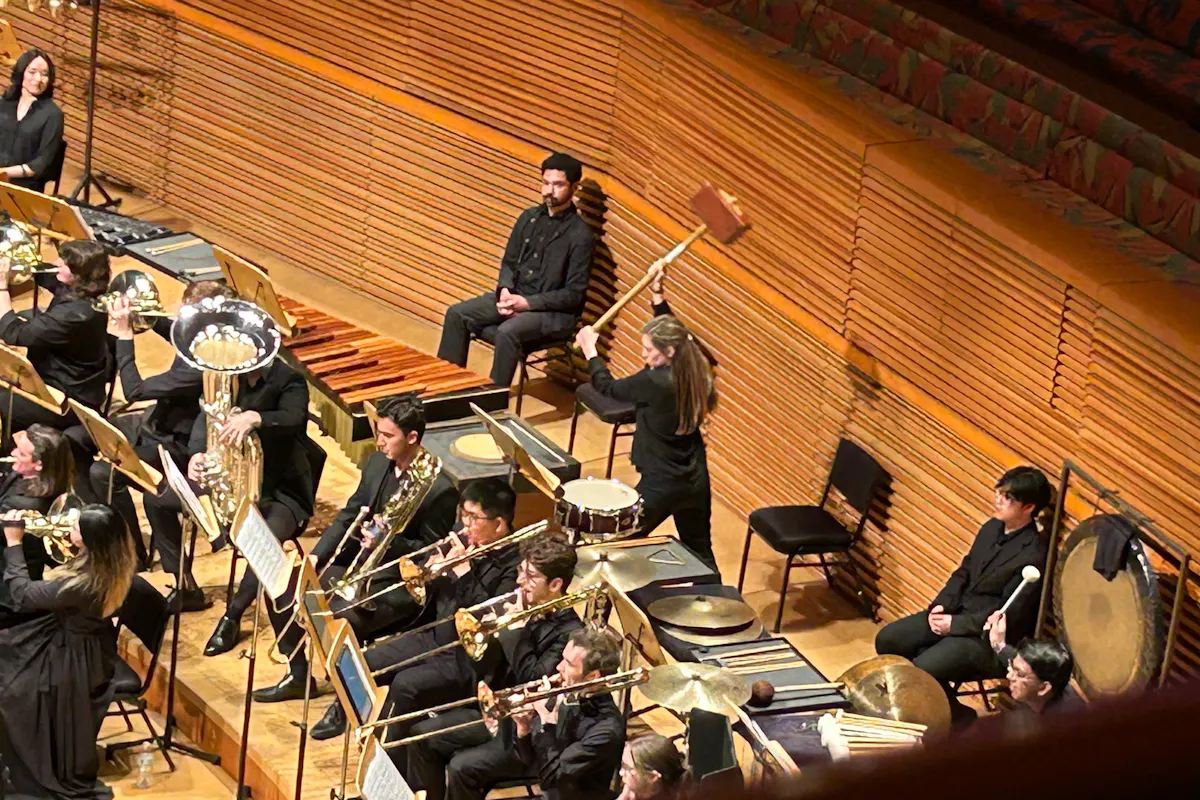
Both made the most out of access to art and artists during their time at UCLA. Lumetta worked as an arts preparation intern at the Hammer Museum, where they did tedious work maintaining Kelly Wall's eclectic sculptures for "Made in L.A. 2025," and helped install "Several Eternities in a Day," which highlights perspectives from across the Americas. Wang made prolific use of the "illegally good" passport program through UCLA's Center for the Art of Performance, which offers UCLA students affordable tickets to season performances.
Both said UCLA helped reinforce the instinct that art history is not a spectator discipline. It asks you to make something, touch something and carry something forward.