Trusting the Story
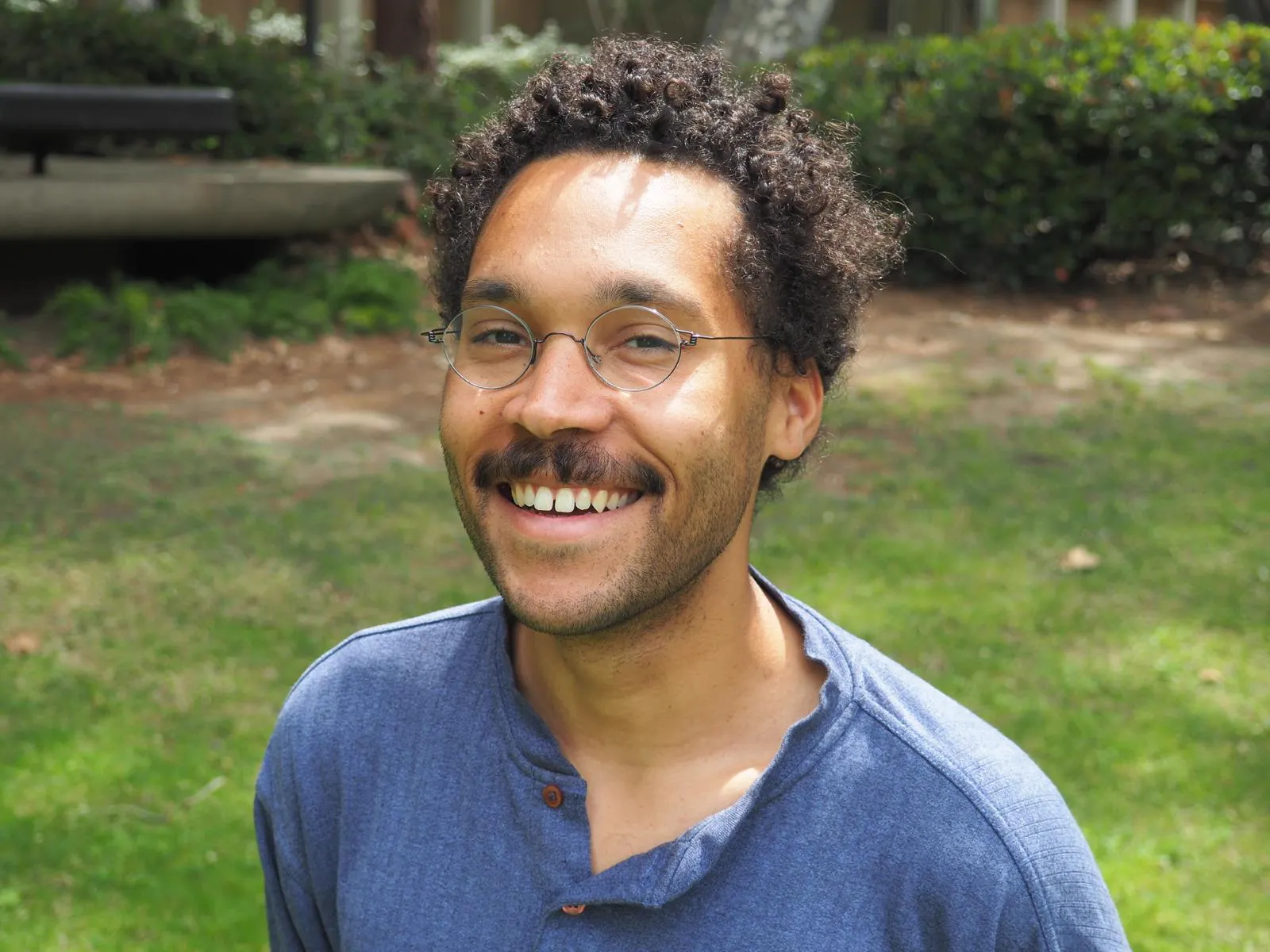
It's a tale of two houses. An opera house two cousins built because they thought Chicago wasn't cultured enough. A brothel across the way. The day the opera house was supposed to reopen, the city burned. That's the premise of the script Cody Lee spent rewriting during his final quarter in the School of Theater, Film and Television's MFA Screenwriting program — a drama set against the Great Chicago Fire of 1871, structured around two worlds that won't leave each other alone.
"That's what I like my writing to be," he said. "Sort of this high-low balance. I'm from a lower-middle-class household. My mom's white, my dad's black. I've just always been in the middle of this thing. So I deal with two worlds at once."
Lee grew up in Chicago and studied creative nonfiction at Columbia College Chicago. He turned to personal essays and memoir, finding journalism's aversion to the first-person constricting. He started writing book reviews for Publishers Weekly and eventually finished a sitcom pilot that was published as a standalone book by Long Day Press called "The Everys," and came to L.A. to shop it around. That's no small task and so he applied to the MFA screenwriting TV track, to keep striving.
After two years, nine scripts and a rewrite class that turns first drafts into something polished, faculty pushed him toward the personal. Professor Phyllis Nagy, he said, has been his favorite person in the program.
"For a while, I was just writing things that I thought were interesting," he said. "And then I was like, let me dial it back and bring it to a more personal level."
As a TA for one of Nagy's screenwriting classes, he gave a lecture on storytelling without dialogue. He walked students through Hitchcock film stills, image by image, no sound, asking what was happening in each frame. The story came through.
UCLA taught him to trust what makes a story, especially in the age of AI.
"Real stories come from real people," he said. "Right now, it's all about truth and honesty and vulnerability that I don't think a system like that can offer."
After graduation, he plans to polish his scripts, keep working on a novel and write some short plays to bring around the city, maybe eat some great food and swim in the ocean, understanding that experiences are what makes storytelling possible. His big television aspiration is slow cinema — pushing against the relentless pace of the medium, bringing patience to the screen.