Two UCLA exhibitions reframe our relationship to the earth
At the Hammer Museum and Fowler Museum at UCLA, two exhibitions opened during April’s Earth Month, each offering distinct but resonant ways of thinking about our relationship to the planet.
At the Hammer, “Several Eternities in a Day: Form in the Age of Living Materials” on view April 5 through Aug. 23, brings together artists from across the Americas working with organic and mineral substances — soil, clay, avocado pulp and natural dyes — that shift and transform over time.
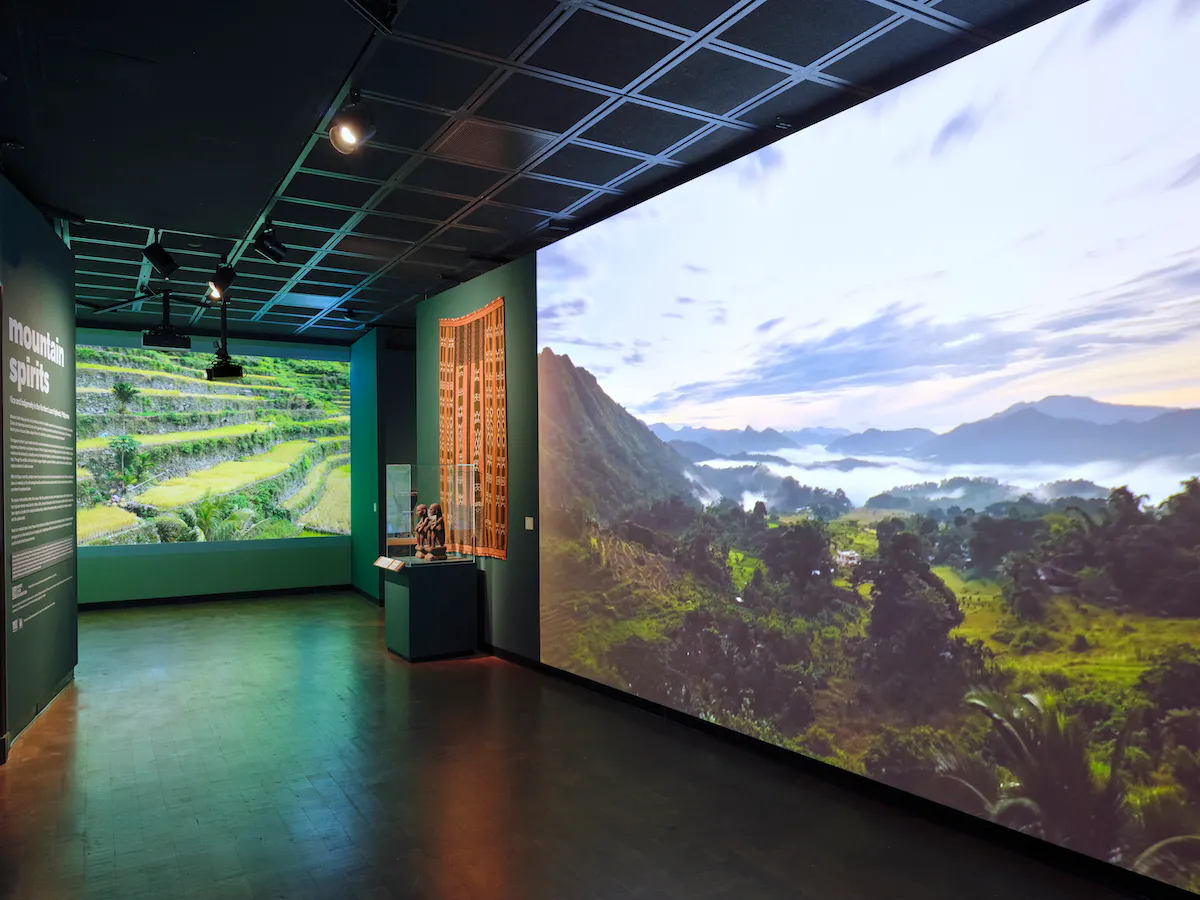
At the Fowler, "Mountain Spirits: Rice and Indigeneity in the Northern Luzon Highlands, Philippines," on view April 12 through January 2027, turns to the Ifugao rice terraces and the systems of knowledge, labor and ritual that have sustained them for centuries.
While one exhibition is rooted in contemporary art and the other in cultural history, both ask viewers to consider what it means to be in relationship with the earth — not simply as inhabitants, but as participants within a shared, living system.
At the Hammer, materials morph and decay, reminding viewers that change is inevitable and ongoing. At the Fowler, systems endure — but only through care, knowledge and collective labor.
Both exhibitions ultimately ask a question of the viewer: What does it mean to observe, to participate and to remain accountable to the only planet we have ever known?
At the Hammer, materials in motion
At the Hammer, that inquiry begins quite literally, with "earth."
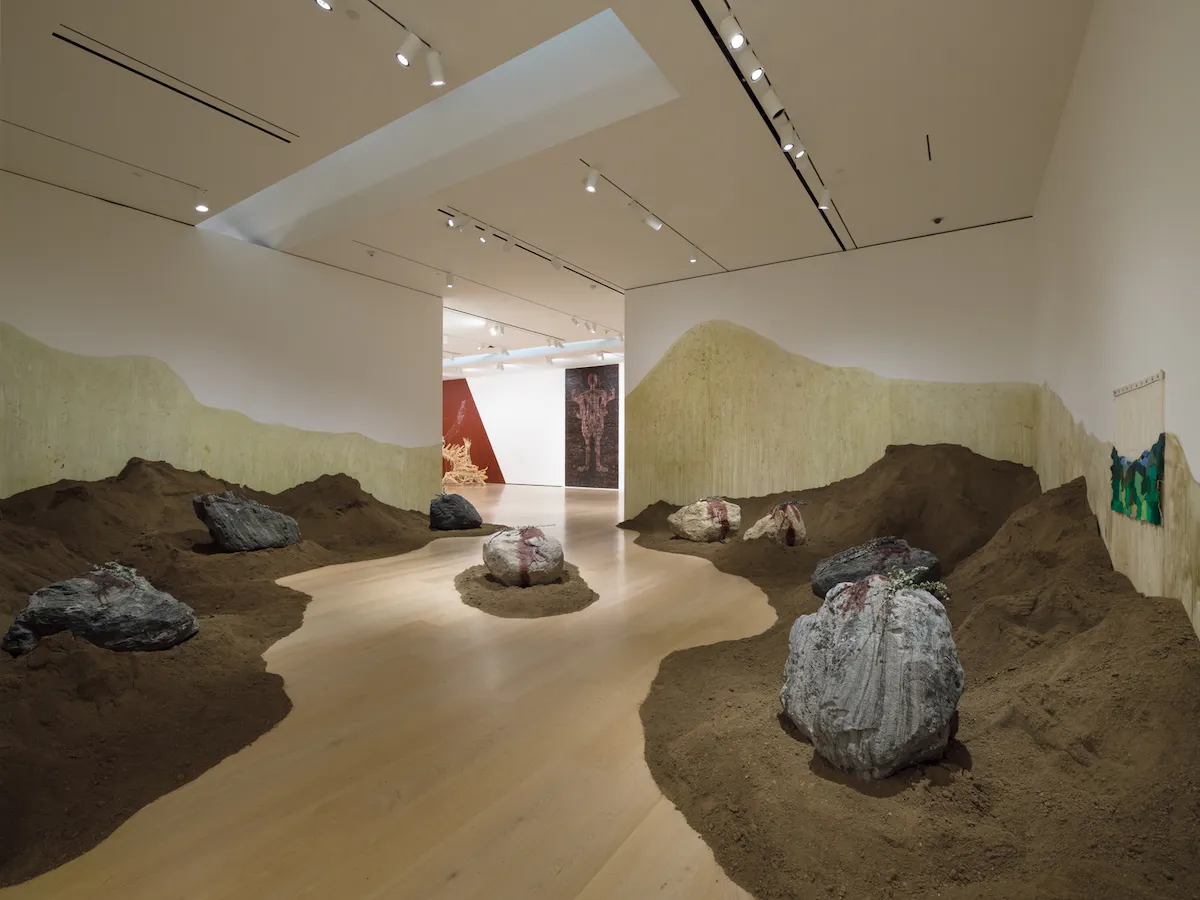
“Several Eternities in a Day” opens with a sculpture by Guatamalan artist Edgar Calel composed of soil, stone and eucalyptus branches — an arrangement that immediately engages the senses. The smell of earth is unmistakable, setting the tone for a show in which many materials are not fixed, but alive: subject to decay, change and time.
Throughout the galleries, works resist permanence. Paintings made with avocado pulp will darken and deteriorate over the course of the exhibition and be destroyed at the end of it. Clay sculptures bear the marks of fire and air. Sound installations by Raven Chacon register as vibrations through walls and floors, as much felt as heard.
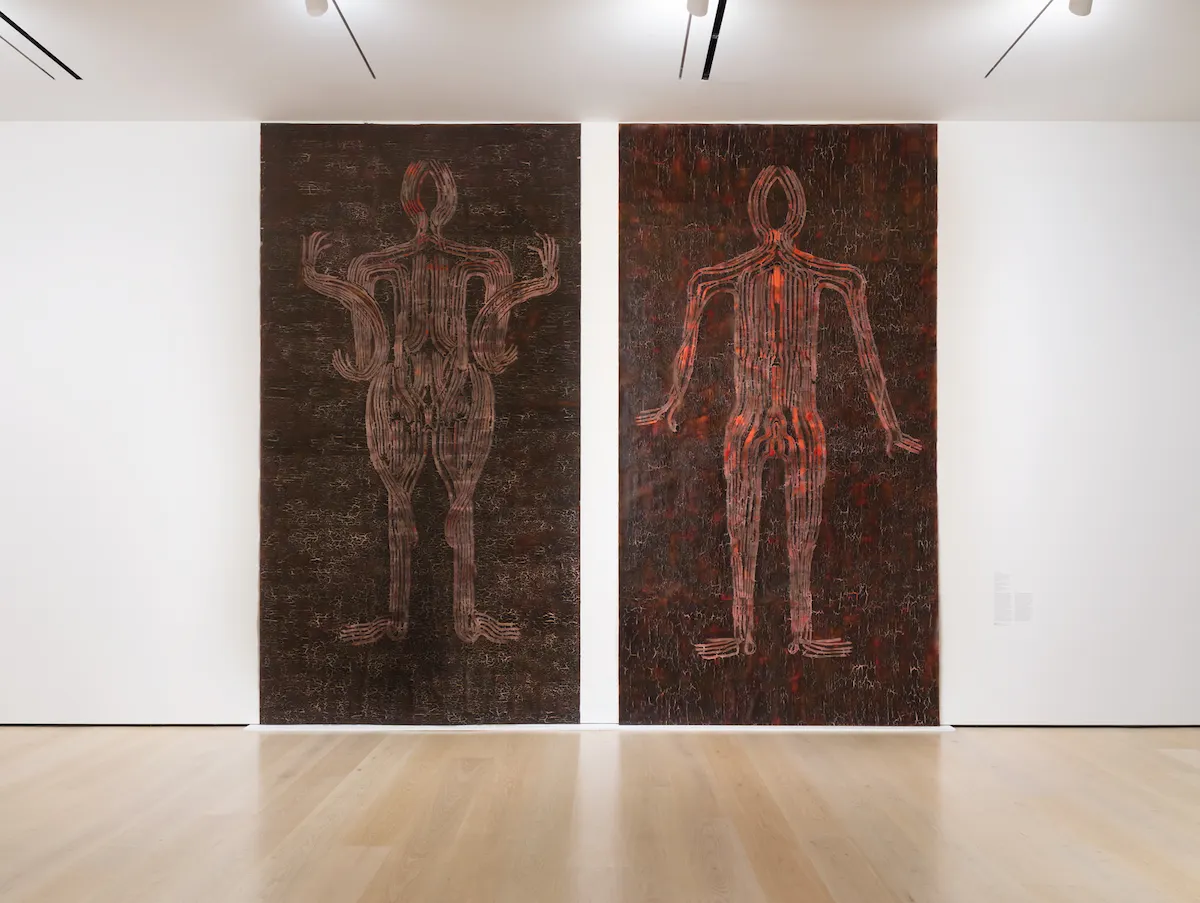
For curator Pablo José Ramírez, this focus reflects a broader shift in contemporary practice. Many artists, he suggests, are turning toward what he calls “living materials” — substances in continuous transformation — as a way of rethinking not only form, but the role of the artwork itself.
“We are trying to propose a different form of internationalism that is rooted in ancestral belonging and is also connected to the ethnic movement,” he said.
Hammer director Zoë Ryan described the exhibition as both ambitious and generative for the institution.
“Its global, non-colonial point of view challenges us as an institution to think expansively about the presentation and preservation of objects,” she said.
That challenge is visible throughout the exhibition. What does it mean to collect something that will change, or even disappear? What does it mean to treat materials not as inert, but as collaborators?
By the final gallery — a darkened room filled with sand, where visitors are invited to sit and linger — the shift is complete. The experience moves from observation to immersion, from looking at materials to being physically situated within them.
At the Fowler, systems that endure
Across campus, “Mountain Spirits” offers a different perspective — one grounded not in the instability of materials, but in the endurance of systems.
The exhibition centers on the Ifugao rice terraces of northern Luzon, a UNESCO World Heritage landscape shaped over centuries through wet-rice agriculture, forest management and intricate irrigation networks. Rather than presenting these terraces as static achievements, the exhibition emphasizes their ongoing maintenance — and the knowledge required to sustain them.
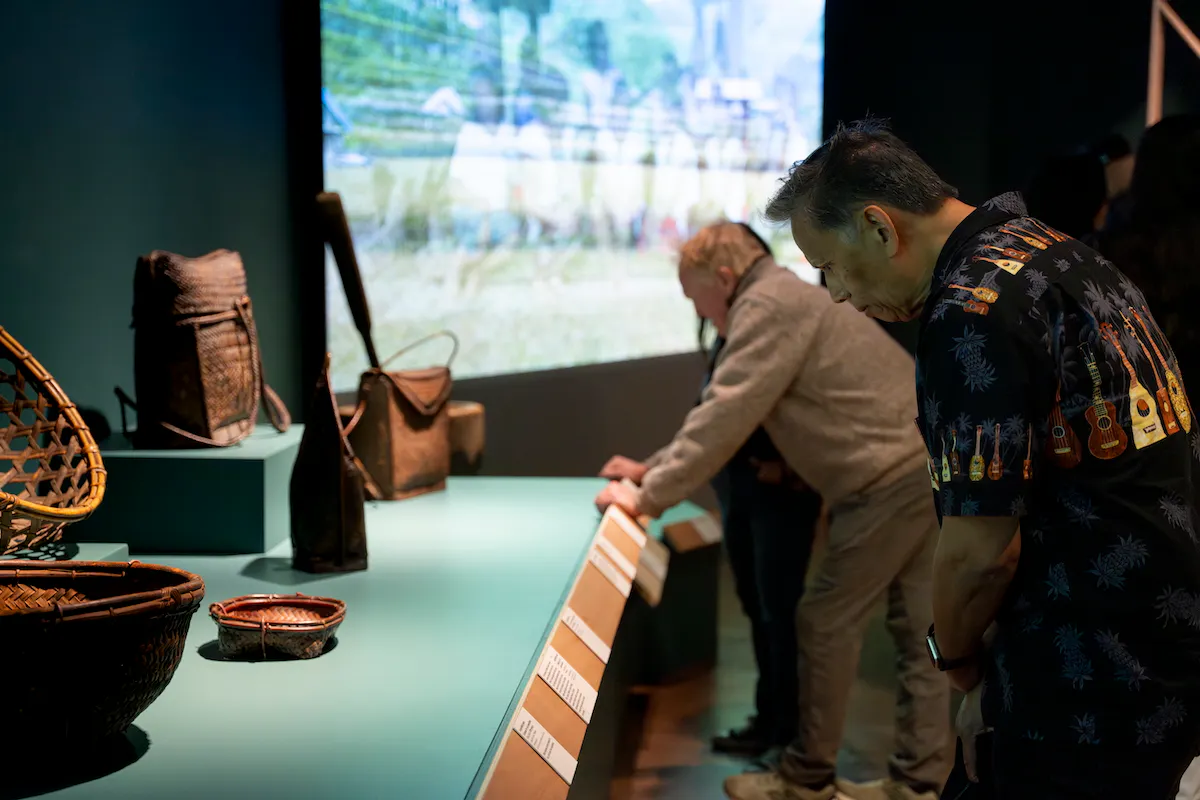
“Mountain Spirits” demonstrates how Ifugao artistic traditions encode ecological knowledge, collective responsibility and spiritual connection to land. For co-curator Marlon Martin, the terraces themselves are inseparable from the values that sustain them.
“They are living heritage, shaped by community and long-standing relationships with the land,” he said. “The terraces persist not through preservation alone, but through continued use across generations.”
Martin, chief operating officer of the Save the Ifugao Terraces Movement, is represented in the exhibition in part through documentation of his home and community.
The exhibition follows the cycle of rice cultivation, from planting and harvest to ritual and celebration. Objects from the Fowler’s collection — tools, baskets, textiles and carved bulul figures (wooden carvings of rice deities or ancestor spirits) — are presented alongside large-scale video and sound installations that situate them within contemporary life in the region, moments of harvest and ceremony. These scenes, along with sweeping landscape footage immerse visitors in an ambient visual and soundscape that provide immediate context for the objects on display.
The exhibition is the result of years of sustained collaboration among museum staff, UCLA researchers and Ifugao community members, including archaeologist and co-curator Steven Acabado. The project reflects the kind of interdisciplinary work a research university uniquely enables, where scholarship and curation develop in tandem.
That collaboration also shapes how the exhibition addresses history. Recent archaeological research challenges long-held assumptions that the terraces are thousands of years old, instead tracing their expansion to the 16th century as a strategic response to Spanish colonization. The terraces, in this view, are not relics of an untouched past, but evidence of adaptation and resistance.
Throughout the galleries, the emphasis remains on continuity — and the pressures that threaten it.
Climate disasters are one. In a striking video installation, aerial footage captures a portion of the terraces that has since been damaged by a landslide following severe storms, turning the exhibition into a space of memory preservation for a landscape that no longer exists in the same form.
Another challenge is generational. As younger members of the community move away or engage with the land in different ways, the question becomes how knowledge is carried forward. The concept of tawid, or inheritance, offers one answer — not as ownership, but as responsibility.
“[The terraces] are not there because it’s old,” Martin said. “It’s there because it’s being maintained by people.”
For Fowler director Silvia Forni, that framing is central.
“It invites visitors to rethink relationships between land, culture and responsibility,” she said.

